
Blog
CJC-1295 Reconstitution, Concentrations & Storage: Lab Guide

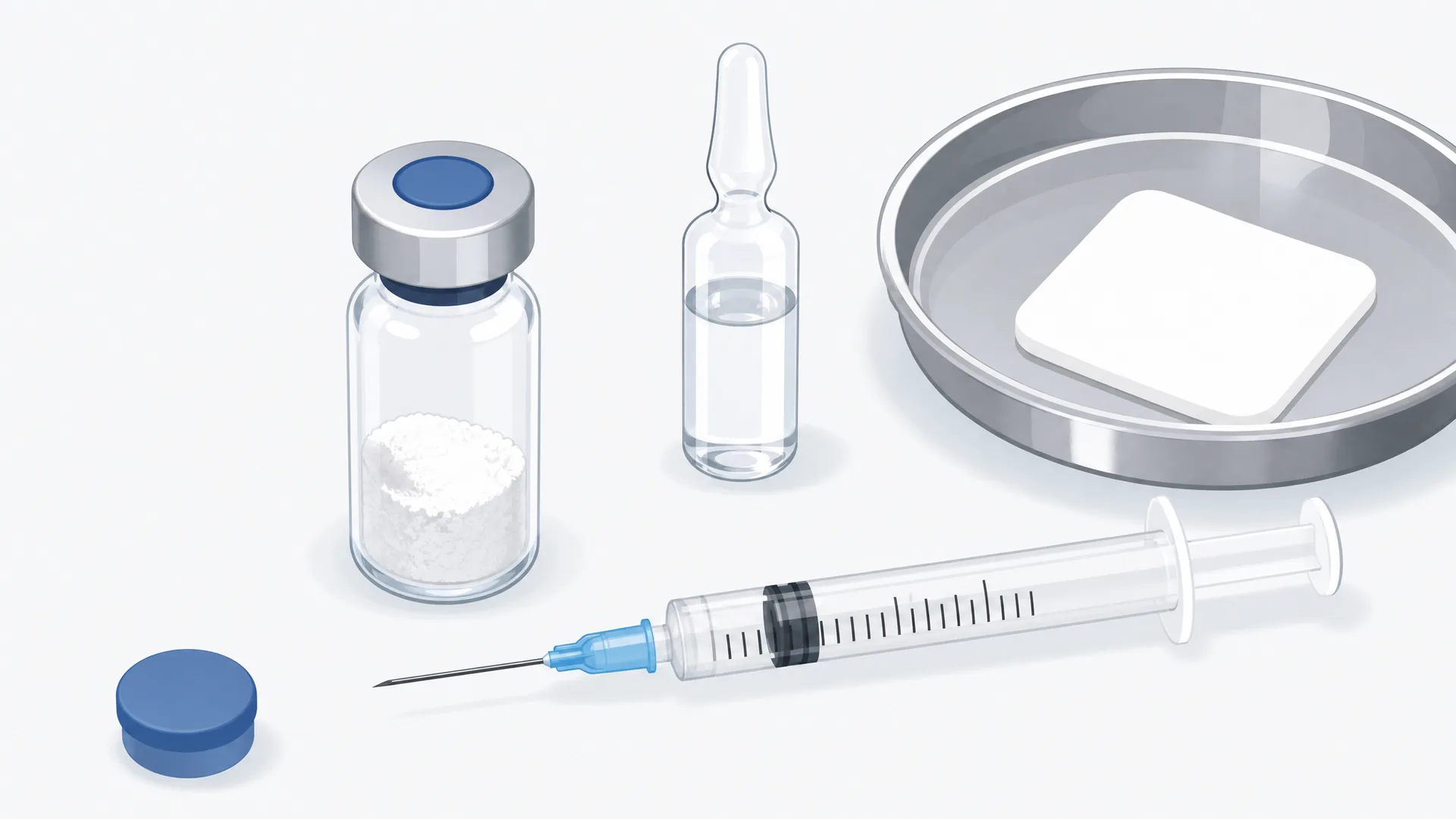
Online forums are full of mismatched advice on peptide handling, and CJC-1295 is one of the most misrepresented compounds in that space. This guide sets out a structured, laboratory-grade approach to CJC-1295 reconstitution, working concentrations and storage, so that results stay comparable from one experiment to the next.
What Is CJC-1295 and Why Reconstitution Protocol Matters
CJC-1295 is a synthetic analog of growth-hormone-releasing hormone (GHRH). Researchers study it for its receptor-binding behavior and its role in growth hormone secretion pathways. It is supplied as a lyophilized (freeze-dried) powder and must be reconstituted before use in any experimental protocol.
Inconsistent handling is the biggest source of unreliable results in peptide research. A vial mixed at the wrong ratio, with diluent added too fast, or stored at the wrong temperature will not behave the same way twice, and that variability undermines the validity of any downstream data. A structured protocol standardizes how the peptide is dissolved, measured and stored.
CJC-1295 in Growth Hormone Research Contexts
In laboratory settings, researchers use CJC-1295 to model GHRH receptor activity and downstream growth hormone release in vitro and in preclinical models. It is not approved for human use and is not a treatment for any condition. Its research value comes from a consistent, well-characterized structure, which only holds up if it is reconstituted and stored correctly.
CJC-1295 Reconstitution: Step-by-Step for Lab Use
Reconstitution means adding a suitable diluent, typically bacteriostatic water, to lyophilized peptide to produce a stock solution of known concentration. The goal is to dissolve the peptide fully without damaging its structure.
- Allow the vial and diluent to reach room temperature.
- Disinfect the vial septum and work on a clean, uncluttered surface, ideally in a laminar flow hood.
- Measure the required volume of diluent with a calibrated pipette or sterile transfer syringe.
- Add the diluent slowly down the inside wall of the vial rather than directly onto the powder.
- Let the vial stand for a minute or two, then swirl gently until fully dissolved. Never shake it.
- Label the vial with the concentration, lot number and reconstitution date.
Choosing the Right Diluent Volume
The diluent volume depends on the vial’s labeled peptide mass and the stock concentration the study needs. Reconstituting 2 mg of peptide in 2 mL of diluent gives a 1 mg/mL stock; a 5 mg vial in 5 mL gives the same concentration. Using a round-number stock concentration simplifies every later dilution calculation and keeps records consistent across batches. The chosen concentration should follow the study design, not a fixed rule.
Working Concentrations for Research Protocols
Most assays do not use the stock solution directly. Working solutions are prepared by serial dilution into the assay buffer or medium, using the standard relationship C1 × V1 = C2 × V2. For example, diluting 10 µL of a 1 mg/mL stock into 990 µL of buffer gives a 10 µg/mL working solution.
The working concentration range depends entirely on the model system, the endpoint being measured and the comparison groups involved, and it should be established from the published literature for that model and confirmed with a concentration-response pilot. There is no universal concentration for CJC-1295 research.
Common Pitfalls in Concentration Calculations
The most frequent error is calculating concentration from the wrong peptide mass, for example ignoring the difference between gross vial weight and net peptide content stated on the certificate of analysis. Other common mistakes are using pipettes outside their accurate volume range, skipping intermediate dilution steps for very low concentrations, and failing to record the reconstitution date, which makes it impossible to judge whether a solution is still within its stable window.
CJC-1295 Storage and Vial Handling Best Practices
Storage conditions affect a peptide’s stability as much as reconstitution technique does, and lyophilized powder and reconstituted solution have different requirements.
Lyophilized vs. Reconstituted Storage Conditions
Unreconstituted, freeze-dried CJC-1295 should be stored frozen and protected from light; in that state it remains stable for extended periods because there is no solvent to drive degradation reactions.
Once reconstituted, the solution should be refrigerated at 2–8 °C and used within its documented stability window. Where longer storage is needed, divide the stock into single-use aliquots and freeze them, so that no aliquot goes through more than one freeze-thaw cycle. Keeping vials in their original packaging or wrapped in foil protects them from light between experiments.
Responsible Research Use and Compliance Considerations
Body Tech Peptides sells CJC-1295 strictly for laboratory and experimental research. It is not a medicine, supplement or treatment, and it carries no approval for human or veterinary use.
All purchasers must accept a responsibility agreement confirming that compounds are used strictly for laboratory research and not for human consumption. The handling steps described here apply to controlled laboratory environments with sterile technique, calibrated equipment and documented protocols. None of this content is medical advice or a recommendation for human use.
Related Growth Hormone Signaling Research
CJC-1295 is one piece of a broader field of growth hormone signaling research. Researchers examining related pathways often study BPC-157 in tissue-level models, or use Tesamorelin research vials, another GHRH analog, as a comparison compound.
For labs establishing a standardized reconstitution and storage workflow, sourcing purity-tested vials and diluent from a single supplier reduces variability between batches. Body Tech Peptides supplies both, with batch documentation available, so research teams can build a protocol on a known starting point rather than an assumption.

7 thoughts on “CJC-1295 Reconstitution, Concentrations & Storage: Lab Guide”