
Blog
TB-500 Peptide for Sale: High-Purity Research Vials

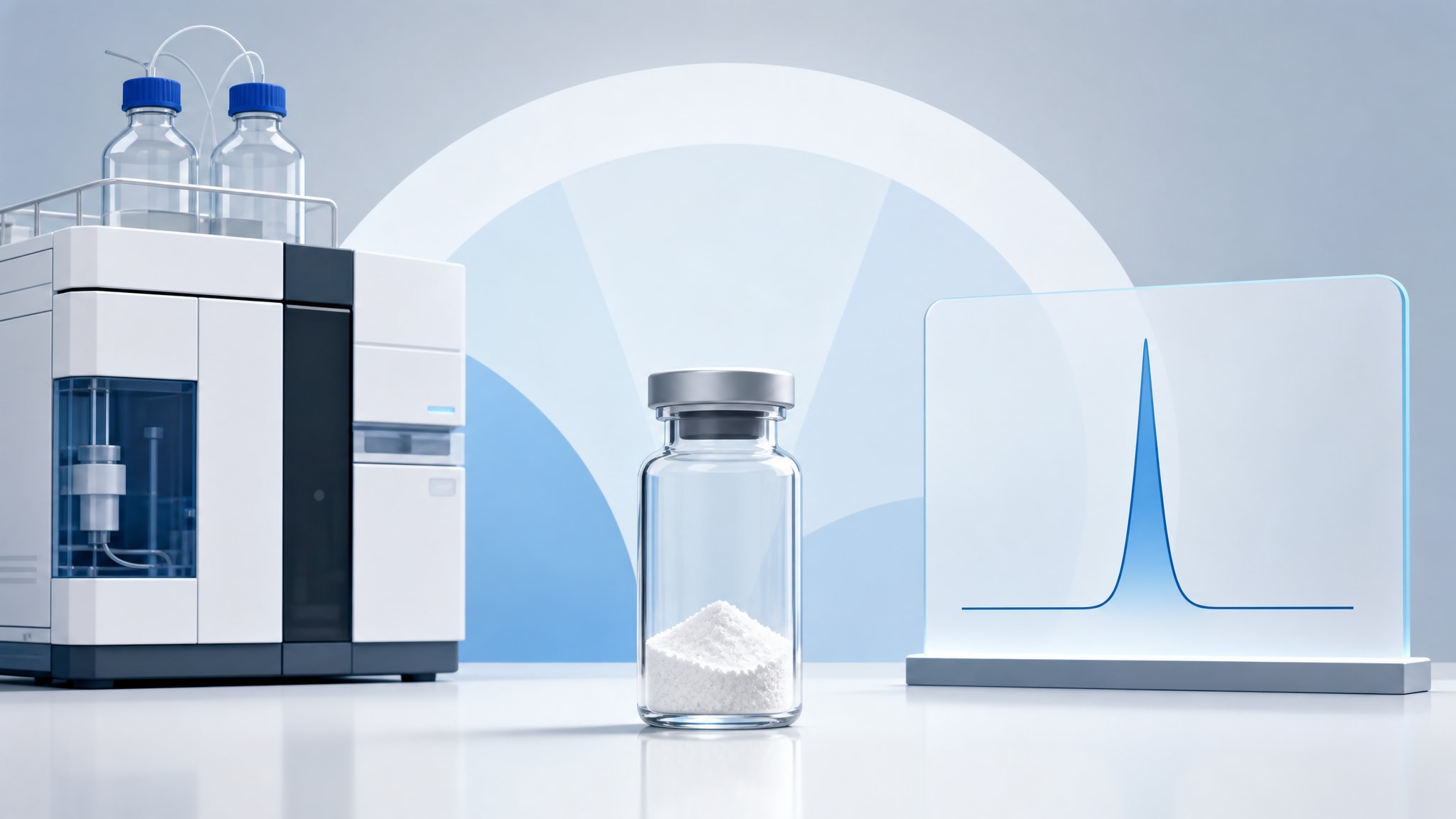
TB-500 peptide for sale listings vary significantly in quality. Researchers must distinguish between verified laboratory reagents and unverified compounds before starting any study. High-purity thymosin beta-4 is essential for reproducible data in cellular assays, yet the market contains products lacking rigorous analytical documentation. Body Tech Peptides supplies TB-500 strictly as a research chemical and requires buyers to validate purity through third-party certificates of analysis rather than marketing claims. This product is not approved for human consumption and carries no medical indications.
TB-500 Purity Standards and Third-Party Verification
Research-grade TB-500 typically requires purity verification exceeding 99% via HPLC analysis, since lower purity levels introduce confounding variables that compromise experimental integrity. Review batch-specific documentation before integrating any peptide into your protocol, to confirm identity and rule out deletion sequences. Sourcing third-party tested research peptides adds a layer of assurance on domestic testing standards and supply chain transparency.
HPLC and Mass Spectrometry Testing Protocols
High-performance liquid chromatography separates peptide components by hydrophobicity to quantify the primary TB-500 peak against impurities. Retention time consistency across batches points to stable synthesis conditions and reliable column performance. Mass spectrometry confirms molecular weight, verifying that the amino acid sequence matches thymosin beta-4 exactly. This dual-method approach catches truncations or modifications that HPLC alone might miss during routine screening.
Interpreting Certificates of Analysis for Research
A valid certificate of analysis must display the specific lot number matching the vial received by the laboratory. Net peptide content should be listed separately from gross weight, since salt content can account for significant mass differences in lyophilized powders. Endotoxin levels must fall below established thresholds for cell culture work, or they risk triggering inflammatory responses unrelated to the peptide itself. Documentation without dated test results or accredited laboratory signatures has no evidentiary value for publication-quality research.
Buy TB-500 Research: Sourcing and Compliance Requirements
Acquiring TB-500 for laboratory investigation involves regulatory and contractual obligations beyond a standard commercial transaction. Body Tech Peptides mandates a responsibility agreement for every purchase, restricting products to laboratory research and prohibiting human consumption claims. This compliance framework protects both the supplier and the researcher by setting clear boundaries around intended use.
Laboratory Use Restrictions and Responsibility Agreements
Purchasers must affirm that TB-500 will be used exclusively in controlled laboratory settings, never administered to humans or animals outside approved institutional protocols. The agreement is a legal attestation of research intent, and it shifts liability to the buying institution on acceptance. Violating these terms ends future purchasing privileges and may trigger reporting obligations depending on jurisdiction. The restriction exists because this compound lacks safety profiling for clinical application.
Shipping and Storage Specifications for Lyophilized Vials
Lyophilized TB-500 stays stable at ambient temperatures during transit when protected from moisture and direct light. Desiccants included in the packaging absorb residual humidity that could otherwise start hydrolysis before the vial reaches the lab. On receipt, move the vial to refrigerated or frozen storage right away to preserve long-term integrity until reconstitution. Temperature swings during shipping are generally tolerable for dry powder, but they become critical once the peptide enters solution.
TB-500 Healing Research Peptide: Current Experimental Applications
Thymosin beta-4 is widely documented in the literature for promoting actin polymerization, a mechanism studied in wound healing and cell motility experiments. This biochemical function sets it apart from other compounds in the broader category of tissue repair research peptides, which tend to work through angiogenic or anti-inflammatory pathways. Understanding the mechanistic differences prevents inappropriate substitution between research tools.
Actin Polymerization and Cell Migration Studies
TB-500 binds G-actin monomers to facilitate filament assembly, directly influencing cytoskeletal dynamics in migrating cells. In vitro scratch assays show accelerated gap closure when thymosin beta-4 is present at physiologically relevant concentrations. This effect occurs independently of growth factor signaling, which makes it a useful tool for isolating cytoskeletal contributions to tissue regeneration. Researchers studying fibroblast or keratinocyte migration frequently use TB-500 to establish baseline motility parameters.
Comparative Analysis with BPC-157 in Tissue Models
Both compounds appear in tissue repair literature, but TB-500 and BPC-157 target distinct biological processes and are not interchangeable in experimental design. Those evaluating BPC-157 sourcing and comparison will note that BPC-157 primarily modulates angiogenesis and gastric mucosal protection rather than actin dynamics. Combining both peptides in multi-variable studies requires careful controls, so that observed effects can be attributed to the correct mechanism. Assuming functional equivalence based on overlapping therapeutic categories introduces systematic error into comparative assays.
TB-500 Reconstitution and Laboratory Handling
Proper reconstitution using bacteriostatic water, with gentle inversion rather than vortexing, is critical to preventing structural damage to fragile peptide chains like TB-500. Mechanical shear from aggressive mixing can fragment the 43-amino-acid sequence and reduce bioactivity in later assays. Standardized handling protocols ensure that concentration calculations reflect intact peptide rather than degraded fragments.
Consult a detailed reconstitution guide with bacteriostatic water before preparing solutions for the first time. Add diluent slowly down the vial wall to avoid direct impact on the lyophilized cake. Let the vial sit undisturbed after adding solvent, so it dissolves completely without mechanical agitation. Visible particulate matter after gentle swirling means the peptide hasn’t fully reconstituted, or there may be contamination, and the vial should be discarded.
TB-500 Dosage Research: Experimental Design Parameters
Preclinical literature cites TB-500 dosage research concentrations ranging from nanomolar to low micromolar, depending on cell type and assay duration. Optimal dosing varies significantly between in vitro models and animal studies, which makes cross-study extrapolation unreliable without pilot validation. Your experimental design should include dose-response curves spanning at least two orders of magnitude to identify threshold and saturation points specific to your model system.
Published protocols often report administration frequencies rather than absolute quantities, reflecting differences in metabolic clearance rates across species. Acute injury models typically call for different exposure windows than chronic degeneration studies. Controls for vehicle effects matter more at higher concentrations, where bacteriostatic water components may influence cellular behavior on their own.
Stability and Shelf Life of Research-Grade TB-500
Lyophilized TB-500 stored at -20°C retains structural integrity for extended periods when protected from moisture and repeated freeze-thaw cycles. Reconstituted solutions degrade quickly at room temperature and need refrigeration to stay viable beyond a few days. Plan reconstitution volumes around immediate experimental needs to minimize waste from solution-phase degradation.
Lyophilized vs. Reconstituted Storage Conditions
Dry powder stays stable because it lacks the water molecules that drive hydrolytic cleavage and oxidation. Aliquoting reconstituted peptide into single-use volumes prevents cumulative damage from repeated warming. Glass vials offer better barrier properties than plastic tubes for long-term frozen storage. Label every preparation with its reconstitution date, and discard solutions past their validated stability window regardless of appearance.
Frequently Asked Questions About TB-500 Research Vials
Net peptide content is the actual mass of thymosin beta-4 in a vial. It differs from gross weight because of counterions and residual moisture left from lyophilization. Molar concentration calculations must use net content values, or they risk systematic underdosing in quantitative assays. Manufacturers that list only gross weight force researchers to assume purity factors that may not match batch reality.
Endotoxin specifications matter mainly for cell culture work, where lipopolysaccharide contamination triggers innate immune responses unrelated to peptide activity. Assays measuring inflammatory markers or cell viability are especially sensitive to endotoxin levels above 0.1 EU/mg. Researchers running purely biochemical binding studies may tolerate higher thresholds if controls confirm there’s no interference.
Compatibility with other research compounds depends on solvent chemistry and pH, not presumed biological synergy. Mixing TB-500 with acidic or basic peptides in the same solution risks precipitation or faster degradation. Multi-peptide study designs should validate co-formulation stability empirically before committing resources to large-scale experiments. Separate administration routes or staggered timing often provide safer alternatives to physical combination.