
Blog
How to Reconstitute Peptides With Bacteriostatic Water: 2026 Guide

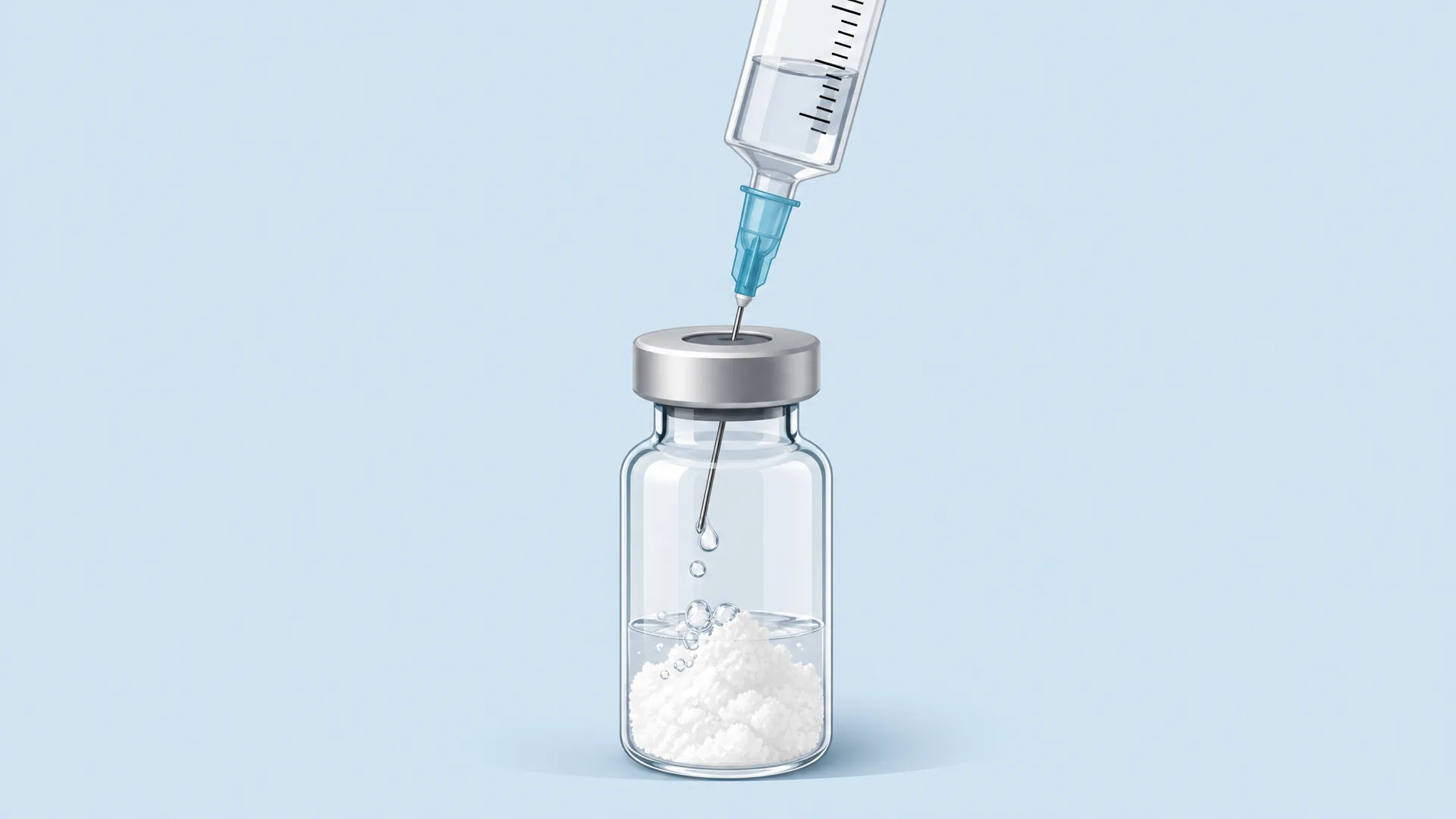
Accurate reconstitution determines whether a research peptide yields reliable data or introduces uncontrolled variables into an experiment. Lyophilized compounds stay stable for extended periods. The moment solvent contacts the powder, degradation pathways activate and measurement precision matters. Researchers need a method for reconstituting peptides with bacteriostatic water that preserves molecular integrity and produces exact dosing concentrations for laboratory protocols.
Generic instructions from open forums do not account for the fact that vial dimensions and peptide masses vary across suppliers. Body Tech Peptides products are manufactured to specifications that dictate specific solvent volumes and handling techniques, and these differ from industry averages. The protocols below address those vendor-specific parameters to support reproducible results in non-human research settings.
Essential Supplies for Safe Peptide Reconstitution
Reconstitution accuracy depends on the quality of consumables used during mixing. Contaminants or the wrong equipment introduce systematic errors that compromise study validity. Reliable research outcomes are not possible if the solvent contains particulates or if the syringe introduces silicone oil into the solution.
Selecting Bacteriostatic Water for Research
Bacteriostatic water for injection is the standard solvent for most peptide research because of its 0.9% benzyl alcohol content, which inhibits microbial growth without denaturing sensitive amino acid chains. Generic sterile water lacks this preservative and allows bacterial growth within hours of vial penetration, which makes any multi-dose protocol unsafe and scientifically invalid. Laboratory-grade solvent has to meet USP standards for endotoxin levels and particulate matter, or it risks interfering with analytical assays or cell culture viability.
Body Tech Peptides supplies bacteriostatic water specifically tested for compatibility with its research-grade peptide catalog. Researchers should review the bacteriostatic water specifications to confirm batch testing documentation before starting any reconstitution procedure. Solvent from unverified sources risks introducing heavy metals or organic impurities that alter peptide binding affinity in vitro.
Syringe and Needle Specifications
Needle gauge affects shear stress on the peptide molecule and the physical integrity of the vial stopper during repeated access. A 27-gauge or 30-gauge needle gives good flow for viscous peptide solutions while minimizing coring of the rubber septum, which can deposit elastomer fragments into the sample. Smaller gauges like 31G reduce pain in clinical contexts, but in reconstitution they create backpressure that can aerosolize the peptide or bend the needle tip against the glass wall.
Syringe barrel material also affects compound stability over time. Glass syringes are more inert for long-term storage studies, though they need careful handling to avoid breakage in high-throughput labs. Polypropylene syringes with low-protein-binding plungers are the practical standard for routine reconstitution, provided they’re certified free of leachable plasticizers that could interact with hydrophobic peptide sequences.
Calculating Bacteriostatic Water Dilution Ratios
Getting the solvent volume right means working out the relationship between net peptide mass, desired concentration, and vial capacity. This calculation ensures each microliter drawn contains a known quantity of active compound, which removes guesswork from downstream assay preparation.
Using a Peptide Reconstitution Calculator
A peptide reconstitution calculator converts milligrams of powder into micrograms per unit volume, which cuts down on transcription errors during busy workflows. Input 5mg of peptide and 2mL of solvent and the result is a concentration of 2.5mg/mL, so 100 µL of that stock contains exactly 250 µg of peptide. These tools account for unit conversions that researchers often miscalculate under time pressure or fatigue.
Manual verification still matters even when a digital tool is used. Multiply the target dose by the number of planned aliquots to confirm the dilution ratio produces measurable volumes on available syringe graduations. Concentrations below 0.5mg/mL often fall beneath the reliable reading threshold of standard laboratory syringes. That calls for a higher stock concentration with serial dilution in buffer afterward.
Adjusting for Variable Vial Sizes
Vial headspace and internal diameter limit the maximum practical solvent volume, regardless of theoretical solubility. A 3mL vial containing 10mg of peptide cannot safely take 5mL of bacteriostatic water without risking stopper displacement or leaving too little mixing volume above the liquid line. Body Tech’s 2mL and 3mL vial formats are sized to optimize surface-area-to-volume ratios for complete dissolution without excess headspace, which is why dilution choices differ from generic industry standards.
Solvent volume has to match both peptide mass and container geometry. Adding 1mL to a 5mg vial creates a 5mg/mL stock suitable for aliquoting. Adding 2mL to the same vial halves the concentration and doubles the injection volume needed for the same dose. That trade-off between concentration precision and volumetric accuracy shapes the reconstitution strategy for each experiment.
Step-by-Step Peptide Vial Mixing Guide
The mechanical act of combining solvent and powder determines whether the peptide keeps its native conformation or aggregates into inactive clumps. Laboratory protocols call for adding solvent against the vial wall, not directly onto the cake, to preserve the structural integrity of the lyophilized powder.
Equalizing Pressure Before Injection
Vacuum-sealed peptide vials hold negative pressure that can pull solvent from the syringe forcefully on needle insertion, causing turbulent mixing and risking sterility. Injecting an equal volume of air into the headspace before adding liquid neutralizes that pressure differential and allows controlled solvent addition. Skip this step and fluid enters too fast, disrupting the lyophilized matrix and generating foam that traps undissolved peptide at the air-liquid interface.
Inject the air slowly through the upper portion of the stopper to avoid bubbling through existing solution in partially used vials. Keep the needle tip above the liquid level throughout to prevent aerosol generation. This preparatory step takes seconds, but it prevents minutes of remedial mixing that raises degradation risk.
Proper Solvent Addition Technique
Directing the solvent stream against the inner glass wall, rather than onto the peptide cake, prevents mechanical damage to fragile molecular structures. The liquid runs down the sidewall and wets the powder from below, letting capillary action draw moisture into the lyophilized matrix without shear forces. Aim directly at the center of the cake instead, and localized high-concentration zones form where incomplete hydration promotes irreversible aggregation.
Swirl the vial gently after adding solvent to finish dissolution without introducing bubbles or denaturing stress. Vigorous shaking is contraindicated for all research peptides, no matter how robust the sequence looks on paper. Complete dissolution typically takes thirty seconds to two minutes, depending on peptide sequence and solvent temperature. Visible clarity signals it’s ready for aliquoting or immediate use.
Reconstitution Protocols for Specific Research Compounds
Molecular weight, secondary structure, and excipient composition create compound-specific requirements that override general guidelines. Treat all peptides the same way and recovery rates and bioactivity end up inconsistent across batches.
Handling Fragile Peptides Like CJC-1295
Longer peptide sequences with complex folding patterns need modified handling to keep their structure intact during the shift from solid to solution. CJC-1295 reconstitution calls for chilled bacteriostatic water and a longer passive wetting period before any agitation begins. Understanding CJC-1295 reconstitution nuances helps researchers avoid thermal shock that can unfold the DAC-modified sequence and expose hydrophobic residues to solvent-mediated degradation.
Temperature control during initial dissolution preserves the drug-affinity complex modification that sets this compound apart from shorter GHRH analogs. Pre-cooling the solvent to 4°C slows kinetic energy transfer during hydration, which reduces the odds of misfolding. Room-temperature equilibration happens naturally once dissolution is complete, so cold-start reconstitution costs nothing and protects expensive research materials.
Dissolving Copper Peptides Such as GHK-Cu
Metal-complexed peptides present distinct solubility challenges because of coordination chemistry between the copper ion and histidine residues. GHK-Cu handling means avoiding phosphate buffers during initial reconstitution, since phosphate ions competitively bind copper and precipitate the complex out of solution. Reviewing GHK-Cu handling considerations clarifies which solvent systems maintain the 1:1 stoichiometry needed for consistent research outcomes.
Bacteriostatic water alone is enough for initial dissolution of copper peptides; buffer exchange should happen only after complete solubilization. The characteristic blue color is a visual indicator of proper complex formation, brownish or greenish tints suggest oxidation state changes or ligand displacement. Researchers working with purity-tested BPC-157 vials get fewer chromatic cues, but the same dissolution rigor applies, confirmed by spectrophotometric methods where available.
Peptide Storage After Reconstitution
Reconstituted peptides need strict environmental controls because aqueous solutions accelerate hydrolysis, oxidation, and microbial contamination relative to lyophilized forms. Reconstituted solutions generally show reduced stability compared to lyophilized powder, which means cold-chain management matters throughout the active research phase.
Temperature and Light Stability Standards
Refrigeration at 2-8°C extends solution stability for most research peptides by slowing enzymatic and chemical degradation. Freezing reconstituted solutions is generally contraindicated unless validated for the specific compound, ice crystal formation can mechanically disrupt peptide structure and concentrate solutes in unfrozen microdomains. UV exposure catalyzes photooxidation of aromatic residues, so light-sensitive sequences need amber vials or foil wrapping during bench-top work.
Label every reconstituted vial with the date, concentration, and storage conditions at the moment of preparation. Adhesive labels rated for cryogenic temperatures prevent information loss during condensation cycles in refrigerated storage. Unlabeled vials become hazardous waste by default in a compliant lab, because unknown contents can’t be risk-assessed or disposed of properly.
Shelf Life Expectations in Solution
Stability windows vary by compound and are for experimental planning only, not guaranteed potency periods. Most linear peptides hold acceptable integrity for 2-4 weeks under continuous refrigeration, while cyclic or modified sequences can degrade within days from ring-opening reactions or deamidation. HPLC or mass spectrometry remain the only reliable ways to confirm solution potency beyond manufacturer estimates.
Aliquoting reconstituted solutions into single-use volumes eliminates freeze-thaw cycles and cuts cumulative contamination risk. Each aliquot should cover one experimental session’s requirement plus a small overage for pipetting error. Discard unused portions after thawing rather than trying to salvage degraded material to save cost.
Responsible Research Use and Safety Compliance
Body Tech Peptides sells its products strictly for laboratory research use, not for human consumption, and requires buyer acknowledgment of responsible use terms. This restriction applies to every reconstitution protocol, storage guideline, and handling instruction in this document, without exception. Researchers are responsible for ensuring their institutional biosafety committee approves all experimental procedures involving these compounds.
Compliance extends beyond the purchase agreement into daily lab practice. Wear nitrile gloves, safety glasses, and a lab coat during all reconstitution activities to prevent accidental dermal exposure or mucous membrane contact. Post spill response protocols specific to peptide powders at the reconstitution workstation, since dry aerosols pose inhalation risks that liquid solutions don’t.
Regulatory frameworks governing research chemicals change continuously, and researchers must verify current status before starting new projects. Institutional environmental health and safety offices provide guidance on disposal, documentation, and reporting requirements for specific jurisdictions. Following these administrative controls protects both individual investigators and their host institutions from liability tied to non-compliant research practices.
Troubleshooting Common Reconstitution Issues
Even experienced researchers run into reconstitution anomalies that call for systematic diagnosis rather than improvisation. Whether a problem stems from technique, equipment, or compound degradation determines if the sample can be salvaged or if disposal is the only option.
Addressing Undissolved Particulates
Visible particles after adequate mixing time point to either incomplete dissolution or contamination introduced during reconstitution. Gentle warming to room temperature plus additional passive soaking resolves most dissolution delays caused by cold solvent or dense lyophilized cakes. Particulates that resist these steps likely represent elastomer cores from needle damage or precipitated peptide from incompatible solvent chemistry.
Filtration through a 0.22-micron PVDF membrane removes particulates, but it also adsorbs a meaningful amount of peptide mass depending on sequence hydrophobicity. That loss has to be quantified and factored into concentration calculations if filtration becomes necessary. Preventing particulate formation through proper technique beats remedial filtration for keeping research dosing accurate.
Managing Cloudy Solutions
Turbidity in reconstituted peptides signals aggregation, precipitation, or microbial growth, depending on timing and storage conditions. Immediate cloudiness on solvent addition suggests pH incompatibility or a concentration that exceeds solubility limits. Turbidity that develops over days of refrigerated storage more often points to bacterial contamination despite the bacteriostatic preservative, particularly if the vial has been accessed multiple times.
Cloudy solutions should never go into quantitative research, regardless of the suspected cause. The optical interference alone invalidates spectrophotometric assays, and the underlying chemical change alters biological activity unpredictably. Documenting the failure mode feeds into institutional knowledge that prevents recurrence in future experiments with the same compounds or supplier batches.

4 thoughts on “How to Reconstitute Peptides With Bacteriostatic Water: 2026 Guide”