
Blog
Bacteriostatic Water for Peptides: Buy & Reconstitution Guide

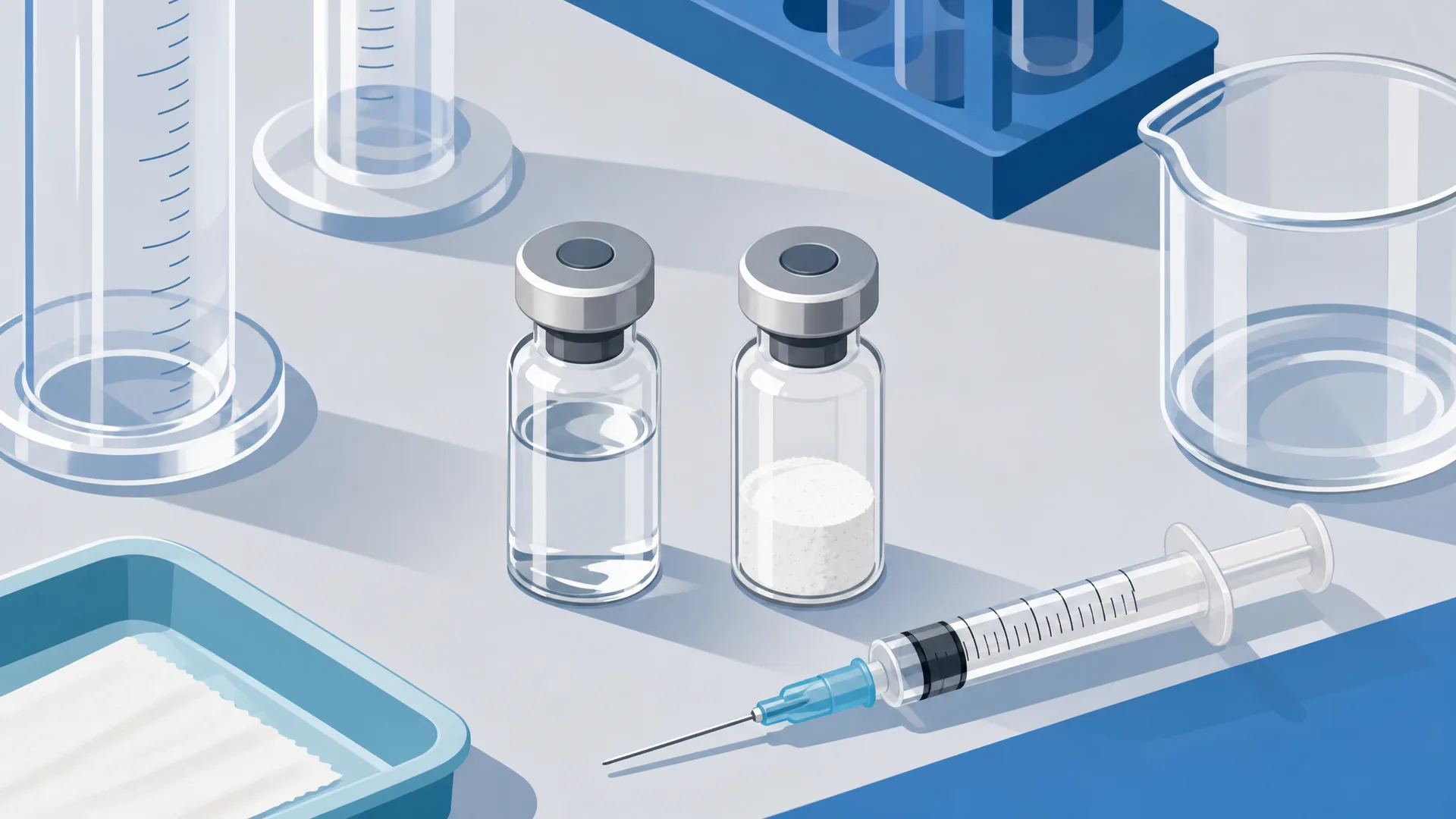
Reconstituting a lyophilized peptide starts with one decision: which diluent to use. Bacteriostatic water for peptides is the standard choice in research labs. But most product listings sell the vial without explaining how much to use for a given peptide. This page pairs the product with a practical mixing reference, so researchers can order water and peptide together and reconstitute with confidence.
What Is Bacteriostatic Water and Why Peptides Require It
Bacteriostatic water is sterile water for injection with 0.9% benzyl alcohol added as a preservative. The benzyl alcohol stops bacterial growth once the vial is punctured. That’s why it’s the preferred diluent for multi-dose peptide vials in research settings.
Lyophilized (freeze-dried) peptides are stable as a powder but fragile once reconstituted. A preservative-free liquid would let bacteria multiply every time a needle re-enters the vial. Bacteriostatic water keeps the solution stable across repeated draws over several weeks, instead of requiring single-use disposal after one draw.
Bacteriostatic vs. Sterile Water: Key Differences
Sterile water contains no preservative. It’s meant for a single immediate use, then it should be discarded. Bacteriostatic water, by contrast, is built for repeated access over time, because the benzyl alcohol slows microbial growth between uses.
The two aren’t interchangeable in multi-dose research protocols. Sterile water adds contamination risk with each additional puncture. Bacteriostatic water is built specifically for vials that will be accessed multiple times. For any peptide vial that won’t be fully used in a single session, bacteriostatic water is the right diluent.
Where to Buy Bacteriostatic Water for Research Peptides
Sourcing matters as much as the mixing ratio. Diluent quality affects peptide stability, so the water should come from a supplier that documents its manufacturing standard, not a generic pharmacy-style listing.
Body Tech Peptides manufactures bacteriostatic water at 0.9% benzyl alcohol concentration, matching the standard used across its Healing & Growth and Metabolic & Longevity peptide lines. That consistency means the same diluent works predictably across different peptide categories. Researchers don’t need to check concentration case by case.
Buy Bacteriostatic Water 30ml: What to Look For
A 30ml vial is the practical size for most research setups. Before buying bacteriostatic water 30ml, check a few basics: a sealed rubber septum, a legible lot number, clear (not cloudy) liquid, and documentation confirming the 0.9% benzyl alcohol concentration.
Packaging integrity is a quick first check. Don’t use a vial with a damaged seal, discoloration, or particulate matter, regardless of price. Reputable suppliers list these specifications directly on the product page rather than leaving buyers to guess.
Signs of a Trustworthy Bac Water Supplier
A trustworthy supplier of bac water for research peptides will typically:
- Publish concentration and manufacturing details for the diluent, not just the peptide.
- Ship water and peptide vials together, so researchers can match reconstitution ratios at checkout.
- Require a research-use acknowledgment before order completion.
- Store and ship products under conditions that protect vial integrity in transit.
Every Body Tech Peptides order requires acceptance of a responsibility agreement confirming the buyer understands products, including bacteriostatic water sold alongside peptides, are for laboratory research only and not for human consumption. This is a standard compliance step for any legitimate research supplier, not an optional add-on.
How to Mix Bacteriostatic Water with Research Peptides
Reconstitution is simple once the volume is known, but precision matters. Too much or too little diluent changes the concentration per milliliter. That throws off every downstream measurement in a research protocol.
Step-by-Step Reconstitution Process
- Let the peptide vial and bacteriostatic water reach room temperature.
- Wipe both rubber septums with an alcohol swab.
- Measure the intended volume of bacteriostatic water with a calibrated sterile pipette or transfer syringe.
- Transfer the diluent into the peptide vial through the septum, directing it against the vial wall rather than the powder.
- Add the water slowly along the glass, letting it run down to meet the powder gently.
- Swirl the vial gently, or let it sit undisturbed for a minute. Don’t shake it.
- Confirm the solution is clear before withdrawing an aliquot.
Reconstitution accuracy depends as much on measurement precision and technique as on the diluent itself. Researchers should add bacteriostatic water slowly along the vial wall to avoid disrupting the peptide’s lyophilized structure. Shaking the vial, or directing the stream straight onto the powder, can denature the peptide and cause foaming or clumping.
Peptide-Specific Mixing Ratios (BPC-157, CJC-1295, GHK-Cu)
Mixing volumes depend on the vial’s total peptide content and the desired concentration per milliliter. Exact ratios should always follow the specific vial’s labeled amount. Here are general reference points used across common research vial sizes:
- BPC-157: typically reconstituted with 1–3ml of bacteriostatic water per vial, depending on the milligram strength. The purity-tested BPC-157 vials page lists exact vial strengths for reference.
- CJC-1295: commonly mixed with 1–2ml, though researchers should check the CJC-1295 reconstitution dosage guidelines for vial-specific detail.
- GHK-Cu: usually mixed with 1–2ml, with further context available on GHK-Cu peptide research applications.
A 30ml vial of bacteriostatic water can reconstitute multiple smaller peptide vials, such as BPC-157 or CJC-1295, across several research sessions. That cuts per-session supply costs compared to buying a fresh water vial for every peptide order.
Storage, Shelf Life, and Handling Best Practices
Correct storage matters as much as accurate mixing. Both the unopened diluent and the reconstituted solution need consistent refrigeration to stay usable for research.
How Long Reconstituted Peptides Last
Once opened, researchers generally consider bacteriostatic water stable for up to 28 days when refrigerated, thanks to the antimicrobial effect of benzyl alcohol. Reconstituted peptide solutions usually get the same treatment: refrigerated at all times and used within that same window, though the exact stability period can vary by peptide.
Peptide vials should go back in the refrigerator immediately after each draw. Leaving a reconstituted vial at room temperature for extended periods shortens its usable life well below the 28-day guideline.
Signs Bacteriostatic Water or Peptide Solution Has Degraded
Before each use, check the vial visually. Discard the solution if it shows:
- Cloudiness or haziness that wasn’t present after initial mixing.
- Visible particles, flakes, or fibers floating in the liquid.
- Discoloration, such as yellowing.
- An off odor when the vial is opened.
- Any sign the septum seal has been compromised.
A clear, colorless solution with an intact seal is the baseline for continued use. Anything else warrants discarding the vial rather than risking a compromised research sample.
Common Reconstitution Mistakes to Avoid
Small errors during reconstitution compound into inaccurate research data. These are the most frequent issues seen in peptide handling:
- Shaking instead of swirling. Vigorous agitation can damage the peptide’s molecular structure and cause foaming.
- Using the wrong needle gauge. A needle that’s too large can damage the septum and compromise the vial’s seal over repeated draws.
- Miscalculating water volume. Adding too much or too little bacteriostatic water changes the concentration and skews every subsequent measurement.
- Skipping the alcohol swab. Failing to disinfect the septum before each puncture adds contamination risk.
- Adding diluent directly onto the powder. This can cause clumping instead of a smooth, even solution.
- Ignoring temperature. Mixing peptide and water while either is too cold can slow proper dissolution.
Bacteriostatic Water FAQs for Peptide Research
What is the difference between bacteriostatic water and normal sterile water?
Bacteriostatic water contains 0.9% benzyl alcohol as a preservative, which allows repeated use from the same vial. Sterile water has no preservative and is meant for a single use.
How much bacteriostatic water should be used to reconstitute a specific peptide like BPC-157 or CJC-1295?
Volumes vary by vial strength, but common reference ranges are 1–3ml for BPC-157 and 1–2ml for CJC-1295. Always confirm against the specific vial’s labeled milligram content before mixing.
How long does bacteriostatic water stay usable once opened?
When refrigerated, opened bacteriostatic water is generally considered usable for up to 28 days, thanks to the antimicrobial effect of benzyl alcohol.
Can bacteriostatic water be reused for multiple peptide vials?
Yes. A single 30ml vial can reconstitute several smaller peptide vials across multiple sessions, as long as each draw follows sterile technique.
How should reconstituted peptides be stored?
Reconstituted peptides should be refrigerated at all times and returned to the refrigerator immediately after each use, generally within the same 28-day window as the diluent.
What size bacteriostatic water vial (e.g. 30ml) is best for typical research use?
A 30ml vial suits most research setups because it can reconstitute multiple peptide vials over several sessions, cutting the need for frequent reorders.
What are signs that bacteriostatic water or a reconstituted peptide has gone bad?
Cloudiness, visible particles, discoloration, an off odor, or a compromised seal all mean the solution should be discarded rather than used.
Bacteriostatic water and peptide vials work as a pair, not two separate purchases. Ordering both together, matched to the correct mixing ratio, is the most reliable way to keep a research protocol consistent from vial to vial. All products are sold strictly for laboratory research use, and every order requires acceptance of the responsibility agreement confirming this use case before checkout.

5 thoughts on “Bacteriostatic Water for Peptides: Buy & Reconstitution Guide”