
Blog
GHK-Cu Peptide Research: Applications & Study Findings

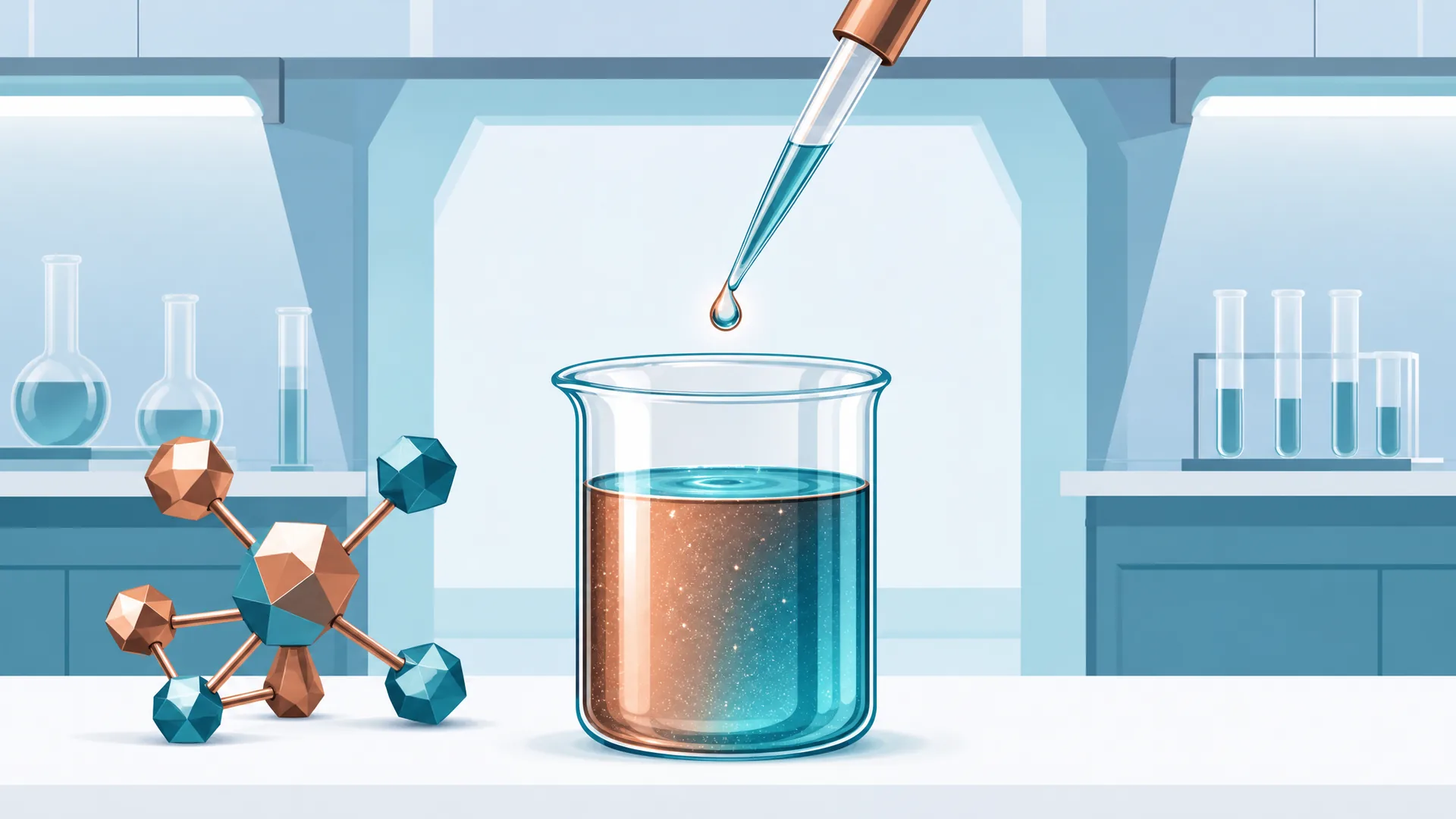
GHK-Cu shows up constantly in skincare marketing, but its origin story is a laboratory one, not a cosmetic one. This overview looks at the copper-binding peptide the way research scientists do: as a signaling molecule studied in vitro and in animal models, not as a finished product with proven human benefits. Everything below is written for laboratory buyers evaluating GHK-Cu peptide benefits in a research context, not for consumer use.
What Is GHK-Cu and Why Does It Appear in Research Studies
GHK-Cu, short for glycyl-histidyl-lysine bound to copper, is a naturally occurring copper-binding tripeptide. Scientists identified it in human plasma decades ago, well before it became a skincare-industry buzzword. Researchers study it because it appears to interact with cell-signaling pathways involved in tissue turnover, not because it has any established consumer application.
That distinction matters for how labs treat the compound. GHK-Cu research studies generally position the peptide as a tool for probing wound-repair biology and gene regulation, not as an ingredient with a defined therapeutic use. This article follows that same research framing throughout.
Copper-Binding Peptide Structure and Origin
Researchers first isolated GHK-Cu from human plasma in the 1970s. At the time, they observed that older plasma samples had a reduced ability to stimulate liver cell growth, compared with plasma from younger sources. That gap in growth-stimulating activity pointed to a possible role for the copper-binding peptide in tissue regeneration. It’s the finding most often cited as the origin of GHK-Cu as a subject of scientific inquiry.
The peptide’s structure, three amino acids chelating a copper ion, gives it both its name and its function as a metal-transport and signaling molecule. Copper plays a role in numerous enzymatic processes, so GHK-Cu’s copper-binding property is central to nearly every research application described below.
GHK-Cu Research Studies: Key Findings Across Applications
Laboratory interest in GHK-Cu spans several adjacent fields: wound biology, inflammation research, and cell signaling. Findings in these areas come almost entirely from cell-culture and animal-model work. None of it translates into approved human treatment claims. Researchers evaluating GHK-Cu peptide benefits for research design should treat published data as hypothesis-generating rather than conclusive.
Tissue Repair and Fibroblast Studies
A large share of GHK-Cu research studies focus on fibroblasts, the cells responsible for producing structural proteins in connective tissue. Researchers frequently cite in vitro fibroblast studies as the basis for including GHK-Cu in wound-healing and collagen-synthesis research protocols. These studies typically expose cultured fibroblasts to the peptide and measure changes in proliferation, migration, or protein output.
Fibroblast behavior is a proxy for wound-repair processes. That’s why this line of research has made GHK-Cu a recurring reference compound in tissue-engineering and regenerative-biology labs. It is a mechanistic model, not a clinical one.
Anti-Inflammatory and Antioxidant Pathways
Beyond fibroblast work, researchers have examined how GHK-Cu interacts with inflammatory and oxidative-stress pathways. Rodent models examining copper peptide complexes have helped researchers study anti-inflammatory and tissue-remodeling pathways relevant to aging research. These animal studies typically track markers of inflammation and oxidative damage after peptide exposure. They offer a window into cellular response, not a therapeutic outcome.
Taken together, this body of work explains why GHK-Cu keeps appearing across such a wide range of laboratory disciplines. It sits at the intersection of tissue repair, inflammation biology, and metal-ion signaling.
GHK-Cu Skin Research: What Laboratory Studies Have Explored
Skin-related studies are where GHK-Cu built its public reputation, and it’s worth understanding why. Skin models are relatively easy to culture and observe, so many early GHK-Cu skin research projects used dermal fibroblasts and reconstructed skin equivalents. Consumer skincare marketing later borrowed from that volume of published lab work, often stripping out the research caveats along the way.
This article deliberately reframes that same body of work back toward its origin. GHK-Cu skin research is a subset of cell-biology research, not a validated cosmetic result. The distinction is worth repeating because it’s the one most commonly lost in translation between lab findings and retail claims.
Collagen and Extracellular Matrix Signaling
The specific mechanism most often studied is GHK-Cu’s interaction with the extracellular matrix, the structural scaffold that surrounds skin cells. Laboratory models have examined how the peptide influences collagen-related gene activity and matrix-remodeling enzymes in cultured tissue. These studies use skin as a convenient, well-characterized model system for studying peptide-driven signaling generally. Skin isn’t the intended application; it’s the test bed.
For lab buyers, this section of the research literature is useful mainly as a demonstration of GHK-Cu’s signaling behavior in a differentiated cell type, alongside the fibroblast and inflammation data covered above.
GHK-Cu Longevity and Metabolic Research Interest
GHK-Cu longevity research sits somewhat apart from the skin and wound-repair literature, though the two overlap mechanistically. Aging researchers are interested in the peptide because of its apparent effect on gene expression tied to tissue maintenance and cellular repair, themes that extend far beyond skin biology.
This has placed GHK-Cu alongside other compounds studied for metabolic and longevity research, including mitochondrial research peptides such as MOTS-c and SS-31, within broader peptide-screening pipelines. Labs studying age-related decline in tissue function often look at multiple copper- and metabolic-peptide candidates side by side, comparing their gene-expression signatures.
Gene Expression and Aging-Related Pathways
Genomic screening work has flagged GHK-Cu as a compound of interest for regulating genes tied to tissue repair and antioxidant response. That gene-expression profile is the reason GHK-Cu keeps showing up in longevity-adjacent research pipelines, even though it originated in plasma-growth studies unrelated to aging specifically.
Researchers building screening panels for aging biology tend to treat GHK-Cu as one data point among many candidate peptides, not a standalone finding. That comparative framing is central to how it gets used in current longevity research designs.
GHK-Cu Copper Peptide Handling in Laboratory Settings
Handling protocols for GHK-Cu follow the same general principles used across the peptide research field. Suppliers typically ship the compound as a lyophilized (freeze-dried) powder, which needs to stay stable until a researcher is ready to reconstitute it for a specific experimental protocol.
Improper handling is one of the most common sources of degraded or unreliable research results. That’s why labs treat storage and reconstitution as part of experimental rigor, not an afterthought.
Storage, Reconstitution, and Stability Considerations
Labs should store lyophilized GHK-Cu cold, typically refrigerated or frozen per the supplier’s documentation, and protect it from light and moisture until use. Once reconstituted, most peptides, GHK-Cu included, have a shorter stable window and need refrigeration rather than room-temperature storage.
Reconstitution generally involves adding bacteriostatic water or an equivalent sterile diluent directly to the vial, without agitating it aggressively enough to denature the peptide. For researchers who want a closer look at reconstitution mechanics used across the broader peptide catalog, the reconstitution guidelines for research peptides cover the underlying technique in more detail. None of this constitutes dosing guidance for human or animal administration outside a controlled research protocol.
Sourcing GHK-Cu for Research: What to Look For Before You Buy
Before a lab decides to buy GHK-Cu peptide, verifying the supplier’s testing and documentation practices matters as much as the price per vial. Peptide purity varies significantly across suppliers, and impurities can confound experimental results in ways that are hard to trace back after the fact.
At minimum, researchers should expect a certificate of analysis showing purity percentage and confirming the compound’s identity, typically via mass spectrometry or HPLC. Suppliers that can’t produce that documentation on request are a red flag for any research budget.
Purity Testing and Documentation Standards
Third-party testing, verification done by a lab independent of the manufacturer, adds a layer of confidence that in-house testing alone doesn’t provide. Look for suppliers who publish batch-specific certificates of analysis rather than generic purity claims that apply across an entire product line.
Body Tech Peptides lists GHK-Cu within its Specialty Peptides and Metabolic & Longevity categories, and requires buyers to accept a research-only responsibility agreement before purchase. That agreement, combined with batch documentation, is the kind of transparency researchers should expect from any supplier before committing to a purchase. For labs also sourcing tissue-repair compounds, purity-tested research peptides like BPC-157 sit in the same documentation-first sourcing category and can help establish a consistent standard across a lab’s peptide inventory.
GHK-Cu remains, above all, a research compound. Its value lies in what it reveals about copper-dependent signaling, fibroblast behavior, and gene expression in controlled laboratory settings, not in any consumer application. Labs evaluating it for a new protocol should weigh the published in vitro and animal-model evidence on its own terms, and select suppliers who can document exactly what’s in the vial.

3 thoughts on “GHK-Cu Peptide Research: Applications & Study Findings”